
Artificial Intelligence is transforming how we search, discover, and consume information. As of late 2025, ChatGPT is seeing more than 800 million weekly active users with billions of prompts daily. With AI-driven tools like ChatGPT, Google’s Gemini, and Microsoft Copilot reshaping the search experience and rapid adoption trends, many marketers are asking: Does SEO still matter?
The short answer is yes. While the mechanics of search are evolving, the foundational principles of SEO remain critical. In fact, they now intersect with AI in powerful ways.
AI Search Doesn’t Eliminate SEO; It Elevates It
AI-powered search engines don’t just pull data from a single source; they aggregate, interpret, and synthesize information from across the web. This means your content still needs to be discoverable, authoritative, and optimized to be included in AI-generated answers. If your site isn’t optimized, AI won’t find it—and neither will your audience.
You need to continue to strive for good traditional Google search results for important keyword phrases in order to have website visibility in AI search.
Why SEO Basics Still Apply
Crawlability and Indexing: AI models rely on structured, accessible data. If your site isn’t technically sound, it won’t be indexed properly. Tip: Go deep on schema and structured data. What schema types unlock AI-generated experiences?
Keyword Relevance: AI understands context, but keywords still signal intent. Targeting key terms helps position your content for both traditional and AI-driven queries. Tip: Adapt your keyword research process to account for new ways of searching. Be curious about how AI is reshaping discovery.
Authority and Trust: AI prioritizes credible sources. Backlinks, domain authority, and expertise remain key ranking factors. Tip: Structure brand information and distribute to the sources AI trusts most such as listings and review platforms. Continue to ensure factual data are complete and accurate.
Content Is the Bridge Between SEO and AI
Here’s the big shift: AI doesn’t just rank pages—it generates answers. That means high-quality, well-structured content is essential. AI tools pull from the most relevant, authoritative sources to create responses. If your content is thin, outdated, or poorly optimized, it won’t make the cut.
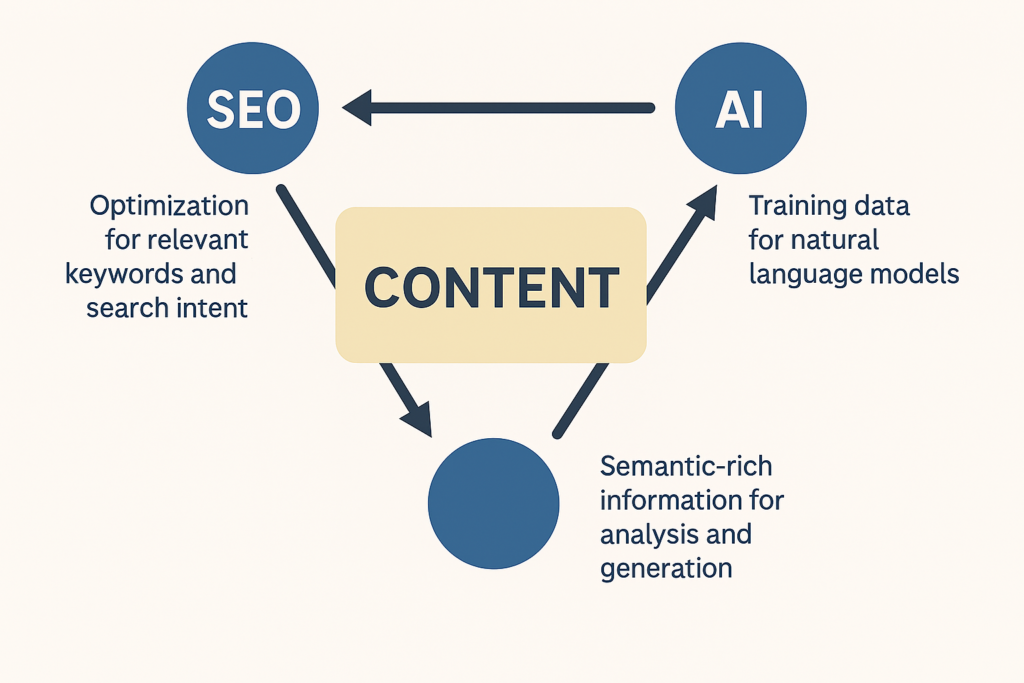
What Makes Content AI-Friendly?
Depth and Clarity: AI favors comprehensive, clear explanations over keyword stuffing. If your content is thin or generic? It gets ignored. Tip: Demonstrate expertise, depth, and clarity. Intentionally raise your hand for inclusion in AI-generated responses.
Structured Data: AI needs to parse and interpret information quickly. This is where traditional SEO practices—like semantic HTML and structured data—intersect with AI optimization. Tip: Use headings, bullet points, logical flow, and schema to help AI parse your content.
Topical Authority: Cover your niche thoroughly. AI looks for patterns of expertise across multiple pieces of content. If your site consistently publishes comprehensive, interconnected content on a topic, it signals authority. Tip: Build content clusters and pillar pages because they matter more than ever; help AI understand your expertise.
SEO + AI = Smarter Content Planning
For B2B marketers, this intersection of SEO and AI is an opportunity for amping up your brand’s value. AI-driven search rewards marketing teams that:
- Plan content strategically around audience pain points and industry trends. Identify your personas, search intent, and the topics that matter most. Consider investing in a AI monitoring tool like Conductor or Clarity ArcAI to research users language and intent.
- Optimize for conversational queries, as AI tools often mimic natural language. Content that answers questions in a clear, conversational tone performs better in AI-driven environments. Think FAQs, how-to guides, and explainer articles.
- Invest in evergreen resources that AI can reference repeatedly. Large language models (LLMs) favor reliable, timeless resources. Guides, industry insights, and best practices ensure your material remains relevant and retrievable for AI-generated answers over time.
Level Up Your SEO Practices for AI Visibility
Keyword Relevance – Adapt your keyword research process to account for new ways of searching, looking at user prompts and long-tail keywords. Grow familiar with how AI is reshaping discovery.
Content Depth and Clarity – Strut your stuff. Demonstrate expertise, depth, and clarity. Become a candidate for inclusion in AI-generated responses.
Crawlability and Indexing – Go deeper on schema and structured data. Get hip to the schema types that AI search cherishes.
Structured Data – Perfect your use of headings, bullet points, information architecture, and schema markup to help AI parse your content.
Topical Authority – Build really good content clusters and pillar pages. Connect the dots for AI to understand your domain expertise.
Conversational Queries – Answer actual user questions in a clear, conversational tone. Favor FAQs, how-to guides, and explainer articles.
Brand Authority and Trust – Structure brand information and distribute to the sources AI trusts most. Continue to ensure factual data are complete and accurate.
The Bottom Line: AI Isn’t Replacing SEO
AI isn’t replacing SEO; it’s building on it. Traditional SEO principles like technical optimization, keyword strategy, and link building still matter. But now, they’re amplified by the need for high-quality, authoritative content that AI trusts. If you want your brand to appear in AI-generated answers and reach more audiences, start by doubling down on SEO fundamentals and elevating your content strategy.
Want to discuss elevating your SEO game? Let’s chat!